среда, 31 августа 2022 г.

31.08.2022

https://www.englishpage.com/gerunds/gerunds_infinitives_22.htm


Example discussion topics

You will probably be given a topic that has pros and cons, or advantages and disadvantages. Here are some example topics:    

  • The internet is the best way to do your shopping.
  • Young people under 15 shouldn’t use mobile phones.
  • All young people should stay at school until they are 18.

When you don’t know an exact word

General words

If you can’t remember the word ‘surgeon’, you could say a more general word like ‘doctor’.

Examples

If you don’t know the word ‘cutlery’, you could give examples such as ‘knife, fork and spoon’.

Relative clauses to give a description

(It’s a person who ... / thing that ... / place where ... )

If you don’t know the word ‘briefcase’, you could say ‘It’s a thing that people use to carry papers to work’.

Describe the purpose or function (It’s used to + infinitive / for + -ing)

If you don’t know the word ‘scissors’, you could say ‘They are used to cut paper’ or ‘They are used for cutting paper’.

This strategy works well with objects that have a clear use or function.

Synonyms (words that mean the same)

If you don’t know the word ‘tiny’, you could say ‘very small’.

This strategy works well with nouns and adjectives.

Antonyms (opposite words)

If you don’t know the word ‘weak’, you could say ‘not strong’.

This strategy works well with adjectives.

Approximations (It’s a kind of ... / It’s a sort of ...)

If you don’t know the word ‘bungalow’, you could say ‘It’s a kind of house’ or ‘It’s a sort of house’.  


You have to boil the potatoes. 

I need some stationery 

A: It's a person who investigates crimes.  

The party was disappointing.

: What's a dental brace

Example discussion topics


  • There shouldn’t be any advertising on TV during children’s programmes.
  • Famous celebrities shouldn’t complain if the paparazzi take photos of them every day.
  • It is the children’s responsibility to look after their parents when they get old.
  • Dogs should be banned from cities.


https://www.englishpage.com/articles/articles_9.htm


понедельник, 29 августа 2022 г.

29.08.2022


1111111111111111 

Now, have a look at the card and prepare a monologue.

Describe an environmental problem or event. You should say:

  • What is it
  • Where is it happening
  • What problems does it cause

IELTS problems & solutions question sample

For example, this is the question you’ve got for IELTS writing task 2:

Influence of human beings on the world's ecosystem is leading to the extinction of species and loss of bio-diversity.

What are the primary causes of loss of bio-diversity?

What solutions can you suggest?


суббота, 27 августа 2022 г.

homework


Write a conclusion for this model answer

Model answer

Nowadays, there are a lot of students who work while studying. Although this tendency may lead to negative results, the number of young people who sacrifice education for work is growing. I believe that this problem has certain causes and can be solved by taking special measures.

It is apparent that most of the students who work have many financial expenses to meet. One common cause is high cost of education. As many colleges and universities set high tuition fees, some families cannot fully afford the higher education for their children. Consequently, these students have to work to pay university and college fees. The other cause is living expenses. Many students study away from hometown, and have to pay for accommodation, food, entertainment etc. As it is often hard to cover these expenses, students are forced to earn money to afford their living. I think that the problem of students working during their studies results in lower quality of education and has no benefits at all. Thus, it should be solved on the governmental level.

I can suggest two possible solutions to this problem. Firstly, the government could make higher education free. For instance, this result can be achieved by financing educational establishments from the country’s budget. Not only will it make universities and colleges accessible for everyone, but it will also reduce the number of working students. The second solution is promoting unpaid e-learning. Such form of distance education doesn’t require a lot of resources to be maintained. What’s more, students don’t have to leave their homes and can plan their schedules the way they prefer.


Write an essay

Question type: advantages and disadvantages.

Here is the question card:

Some people advocate death penalty for those who committed violent crimes. Others say that capital punishment is unacceptable in contemporary society.

Describe advantages and disadvantages of death penalty and give your opinion.


So this is the advantage/disadvantage essay. In this essay you're asked about:

  1. Advantages of capital punishment
  2. Disadvantages of capital punishment
  3. Your opinion about it

Before writing this IELTS essay, you should decide what’s your opinion and then choose your arguments to describe pros and cons of death penalty. You don’t have to make up very complicate ideas. Even simple, but well-written arguments can often give you a band 9 for writing.


https://ielts-up.com/listening/7.2.mp3  


SECTION 2. QUESTIONS 11-20


Questions 11-13

Complete the sentences below.

Write NO MORE THAN TWO WORDS AND/OR A NUMBER for each answer.

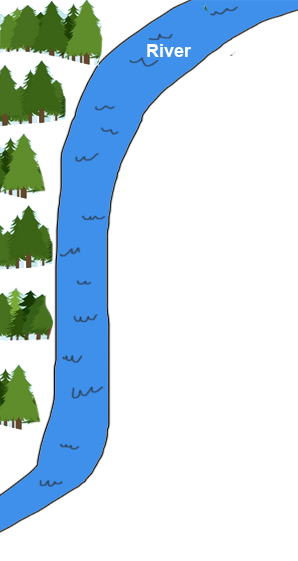
RIVERSIDE INDUSTRIAL VILLAGE

11. Riverside Village was a good place to start an industry because it had water, raw materials and fuels such as  and  .

12. The metal industry was established at Riverside Village by  who lived in the area.

13. There were over  water-powered mills in the area in the eighteenth century.


Questions 14-20

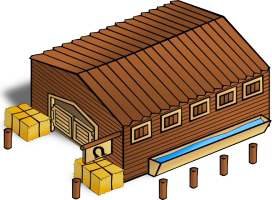
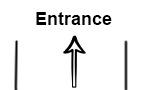
Label the plan below.

Write NO MORE THAN TWO WORDS for each answer.


The Engine Room 

17. 


The Grinding Shop


18. 

19. The

Yard

The Stables 

The 20. 
for the workers


The Works Office 

Car park


The
16. 

The 15. 

Toilets

14.  Road


среда, 24 августа 2022 г.

24.08.2022


Choose the correct idiom for each sentence:

  • 1. I don't feel sick anymore, I feel ___!


  • 2. I'm really sorry, I don't think I can make it to the cinema tonight. Can we ___?


  • 3. I always walk to work, ___ It's good exercise.


  • 4. I don't want to work tomorrow. Let's ___ and fly to Mexico!


  • 5. Ever since I won the lottery, I feel like I'm ___!


  • 6. I can't believe you told our parents you're pregnant the day I told them I'm getting married, you're always ___.


  • 7. I was excited about the weekend but then, of course, my boss came along and ___.


Now, have a look at the card and prepare a monologue.
Describe your favourite weather. You should say:

  • What the weather is like
  • Why do you like it
  • Where you can exprerience such weather conditions.


IELTS Writing Task 2. Sample 2


You should spend about 40 minutes on this task.

Some students work while studying. This often results in lacking time for education and constantly feeling under pressure.

What do you think are the causes of this?

What solutions can you suggest?

Write at least 250 words


1  


Model answer

Nowadays, there are a lot of students who work while studying. Although this tendency may lead to negative results, the number of young people who sacrifice education for work is growing. I believe that this problem has certain causes and can be solved by taking special measures.

It is apparent that most of the students who work have many financial expenses to meet. One common cause is high cost of education. As many colleges and universities set high tuition fees, some families cannot fully afford the higher education for their children. Consequently, these students have to work to pay university and college fees. The other cause is living expenses. Many students study away from hometown, and have to pay for accommodation, food, entertainment etc. As it is often hard to cover these expenses, students are forced to earn money to afford their living. I think that the problem of students working during their studies results in lower quality of education and has no benefits at all. Thus, it should be solved on the governmental level.

I can suggest two possible solutions to this problem. Firstly, the government could make higher education free. For instance, this result can be achieved by financing educational establishments from the country’s budget. Not only will it make universities and colleges accessible for everyone, but it will also reduce the number of working students. The second solution is promoting unpaid e-learning. Such form of distance education doesn’t require a lot of resources to be maintained. What’s more, students don’t have to leave their homes and can plan their schedules the way they prefer.


IELTS Speaking Vocabulary. Weather


Temperatures:

  • boiling hot: an expression to describe a very hot weather.The last summer was boiling hot, the average temperature reached 40 degrees!
  • hot
  • mild: warm and pleasant.The weather in my country is mild in spring.
  • warm
  • chilly: cold.It's chilly today, so I think you should wear a coat.
  • freezing cold: very cold.I wanted to go ice skating on the New Year day, but it was freezing cold and I decided to stay home.

  • degrees Celsius: used to measure the temperature.In the autumn, the average temperature here is 15 degrees Celsius
  • to go below zero: to become negative (about temperatures).The temperature often goes below zero in the winter.

Cloudy weather:

  • gloomy: weather with dark clouds and dull light.Personally, I don’t like gloomy weather. It makes me feel depressed.
  • clear: without clouds.I adore clear weather, when there are no clouds on the sky.
  • to clear up: when clouds and rain disappear.After a long rain, it finally cleared up.

Rainy weather:

  • to be drenched (to the skin): to be completely soaked with water.I forgot to take an umbrella and was drenched in the rain.
  • gentle rain: light rain.
  • drizzle: a light rain that falls in very small drops.It often drizzles in the morning.
  • downpour: a heavy fall of rain.What a downpour! We are drenched to the skin.
  • to pour down: to rain heavily.I like rainy weather. When it pours down, we sit at home with my family, talk and drink hot tea.
  • humid: containing a high amount of water.In my country the climate is generally cold and humid, especially in the north.

Snowy weather:

  • snow-covered: covered with snow.In the winter my family and I go skiing to the snow-covered hills of Switzerland.
  • heavy snow: when a lot of snow falls.Children went to school in spite of the heavy snow.
  • frosty: cold.Continental climate implies hot summers and frosty winters.
  • snowstorm: large amounts of wind and snow.I don’t like winters because of frequent snowstorms.
  • hail: when small balls of ice (hailstones) fall from the sky.After the hail, we found hailstones that were the size of golf balls!

Windy weather:

  • high wind = strong wind.In the autumn strong winds are quite frequent.
  • breeze: a nice gentle wind.I don’t usually like windy weather, but a light breeze from the ocean makes me happy.
  • wind chill factor: when the wind makes the air feel colder than the real temperature.In my hometown it’s very windy in the winter. And though the temperature rarely goes below zero, with wind chill factor it feels like minus 10!

Sunny weather:

  • sunshine: the heat and light of the sun.I love summertime because of the long days and bright sunshine.
  • dry: with no rain.Summers in Turkey are often hot and dry.
  • heat stroke (sun stroke): a serious heat illness because of being too long in hot weather.It’s often boiling hot in my city in the summer and a lot of people suffer from heat stroke.

Other vocabulary:

  • a spell of good weather: a period of good weather. You can use other adjectives instead of "good" to describe weather.After a three-day spell of rainy weather, there was a spell of sunny weather.
  • changeable weather: weather that often changes.In my country the weather is very changeable, periods of hot weather can be followed by heavy rains or even snowstorms!
  • mild climate: a climate without extreme weather conditions.

  • smog: a cloud of pollution.My town is so polluted that I don’t see stars at night because of thick smog!
  • forecast: a prediction of how the weather will change.Although the forecasts predicted a mild winter, the January was freezing cold.

понедельник, 22 августа 2022 г.

homework


READING PASSAGE 2

You should spend about 20 minutes on Questions 15–30, which are based on Reading Passage 2 below.


The science of sleep

  We spend a third of our lives doing it. Napoleon, Florence Nightingale and Margaret Thatcher got by on four hours a night. Thomas Edison claimed it was waste of time.

  So why do we sleep? This is a question that has baffled scientists for centuries and the answer is, no one is really sure. Some believe that sleep gives the body a chance to recuperate from the day's activities but in reality, the amount of energy saved by sleeping for even eight hours is miniscule - about 50 kCal, the same amount of energy in a piece of toast.

  With continued lack of sufficient sleep, the part of the brain that controls language, memory, planning and sense of time is severely affected, practically shutting down. In fact, 17 hours of sustained wakefulness leads to a decrease in performance equivalent to a blood alcohol level of 0.05% (two glasses of wine). This is the legal drink driving limit in the UK.

  Research also shows that sleep-deprived individuals often have difficulty in responding to rapidly changing situations and making rational judgements. In real life situations, the consequences are grave and lack of sleep is said to have been be a contributory factor to a number of international disasters such as Exxon Valdez, Chernobyl, Three Mile Island and the Challenger shuttle explosion.

  Sleep deprivation not only has a major impact on cognitive functioning but also on emotional and physical health. Disorders such as sleep apnoea which result in excessive daytime sleepiness have been linked to stress and high blood pressure. Research has also suggested that sleep loss may increase the risk of obesity because chemicals and hormones that play a key role in controlling appetite and weight gain are released during sleep.

  What happens when we sleep?

  What happens every time we get a bit of shut eye? Sleep occurs in a recurring cycle of 90 to 110 minutes and is divided into two categories: non-REM (which is further split into four stages) and REM sleep.

  Non-REM sleep

  Stage one: Light Sleep

  During the first stage of sleep, we're half awake and half asleep. Our muscle activity slows down and slight twitching may occur. This is a period of light sleep, meaning we can be awakened easily at this stage.

  Stage two: True Sleep

  Within ten minutes of light sleep, we enter stage two, which lasts around 20 minutes. The breathing pattern and heart rate start to slow down. This period accounts for the largest part of human sleep.

  Stages three and four: Deep Sleep

  During stage three, the brain begins to produce delta waves, a type of wave that is large (high amplitude) and slow (low frequency). Breathing and heart rate are at their lowest levels.

  Stage four is characterised by rhythmic breathing and limited muscle activity. If we are awakened during deep sleep we do not adjust immediately and often feel groggy and disoriented for several minutes after waking up. Some children experience bed-wetting, night terrors, or sleepwalking during this stage.

  REM sleep

  The first rapid eye movement (REM) period usually begins about 70 to 90 minutes after we fall asleep. We have around three to five REM episodes a night.

  Although we are not conscious, the brain is very active - often more so than when we are awake. This is the period when most dreams occur. Our eyes dart around (hence the name), our breathing rate and blood pressure rise. However, our bodies are effectively paralysed, said to be nature's way of preventing us from acting out our dreams.

  After REM sleep, the whole cycle begins again.

  How much sleep is required?

  There is no set amount of time that everyone needs to sleep, since it varies from person to person. Results from the sleep profiler indicate that people like to sleep anywhere between 5 and 11 hours, with the average being 7.75 hours.

  Jim Horne from Loughborough University's Sleep Research Centre has a simple answer though: "The amount of sleep we require is what we need not to be sleepy in the daytime."

  Even animals require varied amounts of sleep:

Species

Average total sleep time per day

Python

18 hrs

Tiger

15.8 hrs

Cat

12.1 hrs

Chimpanzee

9.7 hrs

Sheep

3.8 hrs

African elephant  

3.3 hrs

Giraffe

1.9 hr

  The current world record for the longest period without sleep is 11 days, set by Randy Gardner in 1965. Four days into the research, he began hallucinating. This was followed by a delusion where he thought he was a famous footballer. Surprisingly, Randy was actually functioning quite well at the end of his research and he could still beat the scientist at pinball.


Questions 15–22

Do the following statements agree with the information given in Reading Passage 1?

In boxes 15–22 on your answer sheet, write

TRUE                          if the statement agrees with the information

FALSE                        if the statement contradicts the information

NOT GIVEN                if there is no information on this


15. Thomas Edison slept 4 hours a night. 

16. Scientists don't have a certain answer for why we have to sleep. 

17. Lack of sleep might cause various problems. 

18. Sleep-deprivation may be the cause of anorexia. 

19. There are four stages of the REM sleep. 

20. According to Jim Horne, we need to sleep as much as it takes to not be sleepy during the day. 

21. Giraffes require less sleep than dogs. 

22. After four sleepless days, Randy had a delusion about him being a football celebrity. 


Questions 23–27

Choose the correct letter, A, B, C or D.

Write the correct letter in boxes 23–27 on your answer sheet.


23. During the Light Sleep stage:

  1.  Muscle activity increases
  2.  Jiggling might occur  
  3.  It is not easy to be woken up
  4.  After waking up, one may experience slight disorientation


24. Heart rate is at the lowest level during:

  1.  Light Sleep stage
  2.  Rem Sleep
  3.  True Sleep stage
  4.  Third Sleep stage


25. The brain activity is really high:

  1.  During REM sleep
  2.  During the stage of True Sleep
  3.  When we are awake
  4.  During the Deep sleep stage


26. Humans require at least:

  1.  7.75 hours of sleep
  2.  5 hours of sleep
  3.  8 hours
  4.  There is no set amount of time


27. Pythons need:

  1.  Less sleep than tigers
  2.  Twice as much sleep as cats
  3.  Almost ten times more sleep than giraffes
  4.  More sleep than any other animal in the world


Questions 28–30

Complete the sentences below.

Write NO MORE THAN THREE WORDS from the passage for each answer.

Write your answers in boxes 28–30 on your answer sheet.


28. If we continually lack sleep, the specific part of our brain that controls language, is  .

29. True Sleep lasts approximately  .

30. Although during REM sleep our breathing rate and blood pressure rise, our bodies  .


Speaking - record your answer (2min)

Part 2

Now, have a look at the card and prepare a monologue.

Describe a period of time from your studies that was the most difficult for you so far. You should say:

  • When it was
  • Why was it hard
  • What you were doing at that time


воскресенье, 21 августа 2022 г.

Vocabulary. Education


IELTS Speaking Vocabulary. Education


  • subject groups:
    • humanities: studies about human culture, such as literature, languages, philosophy, and history.Chloe excels in humanities subjects. She's adept at arts and languages.
    • sciences: studies about the world, such as physics, biology, chemistry, and maths.Mark doesn't like scientific subjects, he's just too lazy to learn formulas.

  • A for effort: a good mark, which is given someone for trying hard rather than for a success.Although I'm not the smartest in my group, I often get an A for effort, because I try hard.
  • bachelor's degree: an undergraduate course which usually lasts 3 or 4 years.I will receive my bachelor's degree in two years.
  • bookworm: a term to describe someone who really likes to read and spends a lot of time on it.I'm a real bookworm. I won't stop until the book is read.
  • distance learning (e-learning): education that takes place remotely, usually via the Internet.Distance learning is more flexible than traditional education, because students don't have to attend classes and can schedule their timetables as they want.
  • eager beaver: an enthusiastic and hard-working person.My friend is an eager beaver. He studies everything with pleasure and gets great marks.
  • face-to-face classes: a traditional way of studying - in a classroom with a teacher.When I was a kid, face-to-face classes had no alternatives, but nowadays a myriad of educational establishments offer online courses and individual tuition.
  • higher education: education that is followed after high school.I plan on getting higher education after finishing school.
  • hit the books: begin studying hard.I'm on my third year in the university, it is time to finally hit the books.
  • individual tuition (private tuition): instruction received individually or in a small group.Individual tuition is sometimes more effective than group work.
  • intensive course: a course that offers longer and more frequent classes.A few years ago I took an intensive French course in the university.
  • internship: a temporary position which students usually take to get work experience and practical knowledge.Before I went into design industry, I took an internship in a company.
  • master's degree: a graduate course, which follows after bachelor's degree.Master's degree is often important to find a job with a higher salary.
  • mature student: someone who's older than others.Nowadays it's not uncommon to face a mature student in the class. People often change professions and get a second or third degree in their mid-thirties.
  • not the sharpest tool in the shed: a polite way of saying that someone isn't very smart.Maybe John isn't the sharpest tool in the shed, but he's a good friend nonetheless.
  • public schools: exclusive independent schools in the UK.My friend finished a public school a few years ago.
  • schoolboy error: a very basic and stupid mistake.Sam made a schoolboy error on his English test.
  • single-sex schools: schools for either boys or girls.My brother studied in a single-sex school.
  • small fraction: small part.A small fraction of students managed to pass this exam.
  • state school: a school which is paid for by the state or country.It is hard to find a good state school nowadays.
  • subject specialist: a person who is very talented in one specific field.My math teacher was a real subject specialist. Thanks to him math is my favourite subject now.
  • teacher's pet: student whom teachers like the most.Hugo is a teacher's pet, he attends all classes and manages to get good marks with poor knowledge.
  • three R's: basic educational skills (reading, writing, arithmetic).Pupils in a primary school study the three R's.
  • to attend classes: to visit classes.In my college, students need to attend classes five times a week.
  • to fall behind with studies: to progress less quickly than others.Mary was ill for two weeks, so she fell behind with her studies.
  • to give feedback: to give some information or criticism on a subject.I launched a project a couple of days ago and I want my friends to give me some feedback.
  • to goof around: spend time doing nothing important.Sometimes I like to goof around, although my parents scold me for that.
  • to learn something by heart: to memorize something.Last year i had to learn a very big poem by heart for my literature class.
  • to meet a deadline: to finish something within a time limit.Unfortunately, we weren't able to meet the deadline for our project.
  • to pass with flying colours: to pass easily and with excellent result.I'm studying hard and I will pass IELTS with flying colours.
  • to play truant: to skip classes without permission.During my school years I often played truant with my friends.
  • to pursue studying: to continue studying.Lora would like to pursue studying in the future to become a professor.
  • to set aside some time: to take some time.I need to set aside some time to collect my thoughts.
  • to sit an exam: to take an exam.Tomorrow I'll have to sit a two-hour math exam.
  • to take a year out: to spend one year working or traveling before studying in the University.My friend took a year out and went traveling to the UK.
  • tuition fees: money you pay for your education.I had to pay tuition fees this summer.

17.03.2028

    idioms and collocations 1 p 15       Unemployment is one of the biggest problems of contemporary society. What do you think are the main...